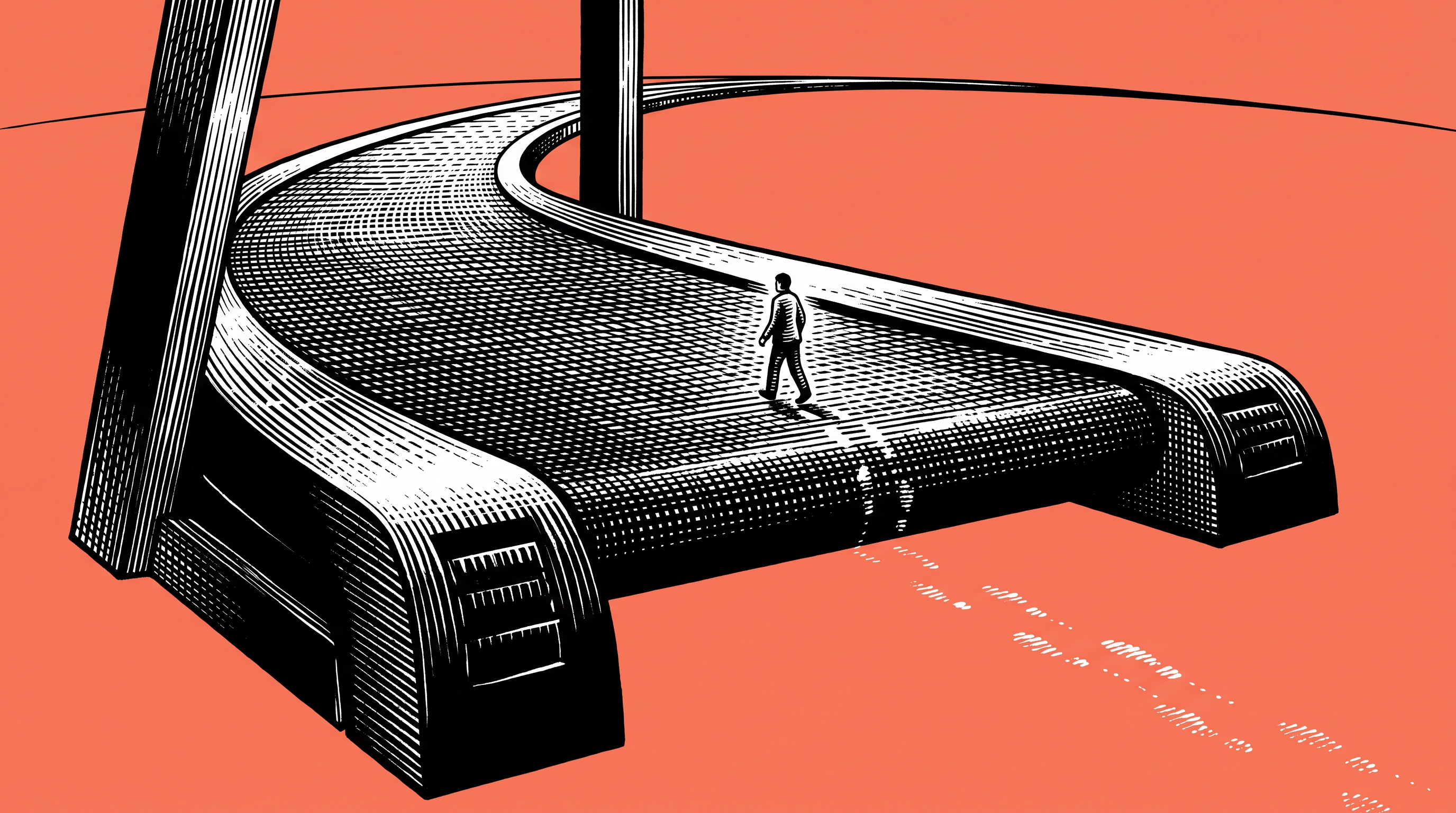
This question carries its own confession, and that is exactly why it is the most honest one I have heard in a while: people start to save time, and after a few weeks find themselves on the screen more than they were before they began. I see it as a predictable stage in the learning curve, one that hits almost everyone around month two, and it only starts to ease once you stop piling more onto it.
One member of our community answered this with rare honesty: for him the calm arrived exactly at month two, and only after he started filtering and dropping ideas before bringing them to Claude, instead of feeding it every thought that crossed his mind in the moment. Selectivity instead of constant feeding, and from there the drop in screen time followed quickly (he described it as moving from being the agent's input to being the one who decides what is even worth letting in).
I notice a recurring pattern in people who get stuck at this stage: the real question they are asking, without quite noticing it, is about how tightly involved they still need to stay, and that is a completely different question from whether the system works, because the whole answer lives in that difference. People who get past it do one simple thing: they collect ideas on the side instead of feeding them in live, and at the end of the day check which ones are actually worth pursuing.
I catch myself doing this too, and my entire role is mapping learning curves: I have fed an agent a mid-run idea just so it would not get lost, and by the end of the week found nineteen like that I never went back to. Nineteen ideas that got frantic attention live and zero attention afterward, and that is exactly the quiet cost nobody writes down.
A prompt, on the house
I have recently gone through a period where I feel like I'm on the screen more than I was before I started working with agents.

Help me map one week:
1. How many of the things I fed the agent were a passing idea I could have set aside and checked at the end of the day, rather than something that needed an immediate answer?
2. Which tasks am I still doing step by step with it, instead of letting it run alone and checking only at the end?
3. If I stopped feeding it ideas in real time this week, what would actually happen: would I miss something real, or just feel less in control?

Give me a direct answer to each question, and if the answer to question 3 is "just feel less in control," tell me that plainly, not gently.
It takes a week of logging instead of feeding in real time, and that is exactly what separates someone who manages the agent from someone whose agent manages their calendar.