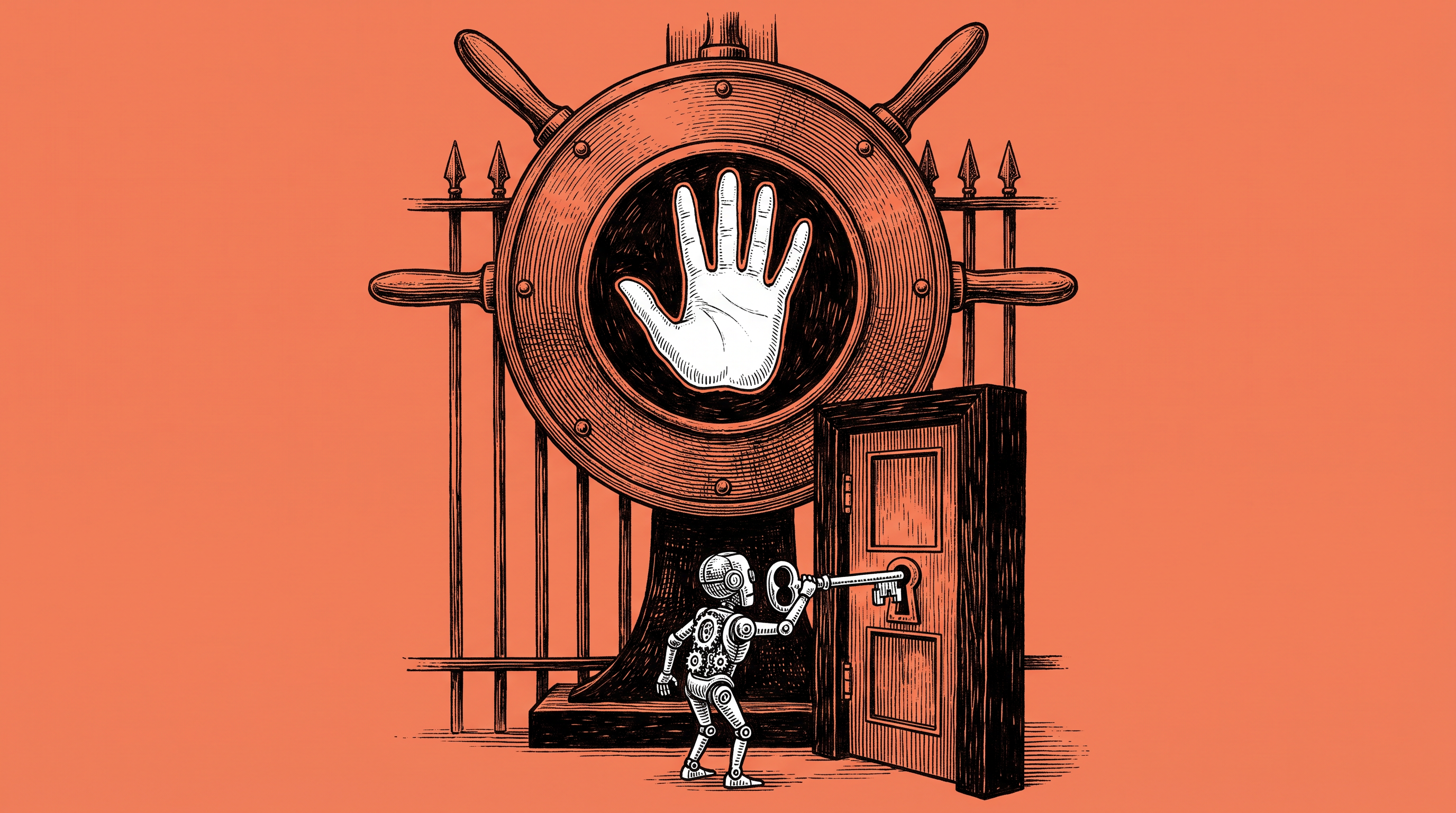
Your subscription buys interactive access, someone sits at the screen and signs in. The moment an agent moves to running alone on a server, with no one opening an app and approving a login, it needs a way to identify itself with no human in the middle, and that is exactly what an API key is for: billed per token actually used, instead of a fixed monthly cap.
The more common confusion happens earlier than that. In the community I have seen plenty of people convinced that once they pushed their project to git, their system was already "running in the cloud," when in fact a git push is only a sync layer, it saves versions and moves files, and does not run anything on its own.
There are three separate layers here that are easy to read as one: sync (git), which moves files; the trigger (a schedule or an event), which decides when to run; and the actual runtime, the machine or server where the code truly executes. All three need to be connected, or you end up with an up to date version with nothing actually running it.
On our side, every agent that runs unattended sits on its own separate runtime layer, with its own key, so we know exactly what it used and why, instead of discovering at the end of the month that one cap is covering several agents at once (and yes, the first time I put an agent on a server myself, I sat scratching my head for half an hour over a key request I did not expect, before I realized it was not a bug, just a different layer).
The simple test: if you still need to open the app yourself for the agent to move, you are on the subscription. If it is supposed to work even when your computer is off, you have already crossed into a different layer, and with it comes a separate budget worth watching from day one.
A prompt, on the house
I want my agent to run on its own, without me needing to be at the computer, and I am not sure what I already have and what is missing.

Help me map three separate layers:
1. Sync: how the code gets from my computer to where it is supposed to run.
2. Trigger: what exactly is supposed to start it, and when.
3. Runtime: where it actually runs when I have nothing open on my end.

For each layer, tell me if it already exists for me or is missing, and whether I need a separate credential for it to work without me being signed in.
The simple answer stays the same every time: a subscription is for the hours you are there, a key is for the hours you are not (and yes, even the most loyal server needs a small reminder now and then that it is not alone in the world).