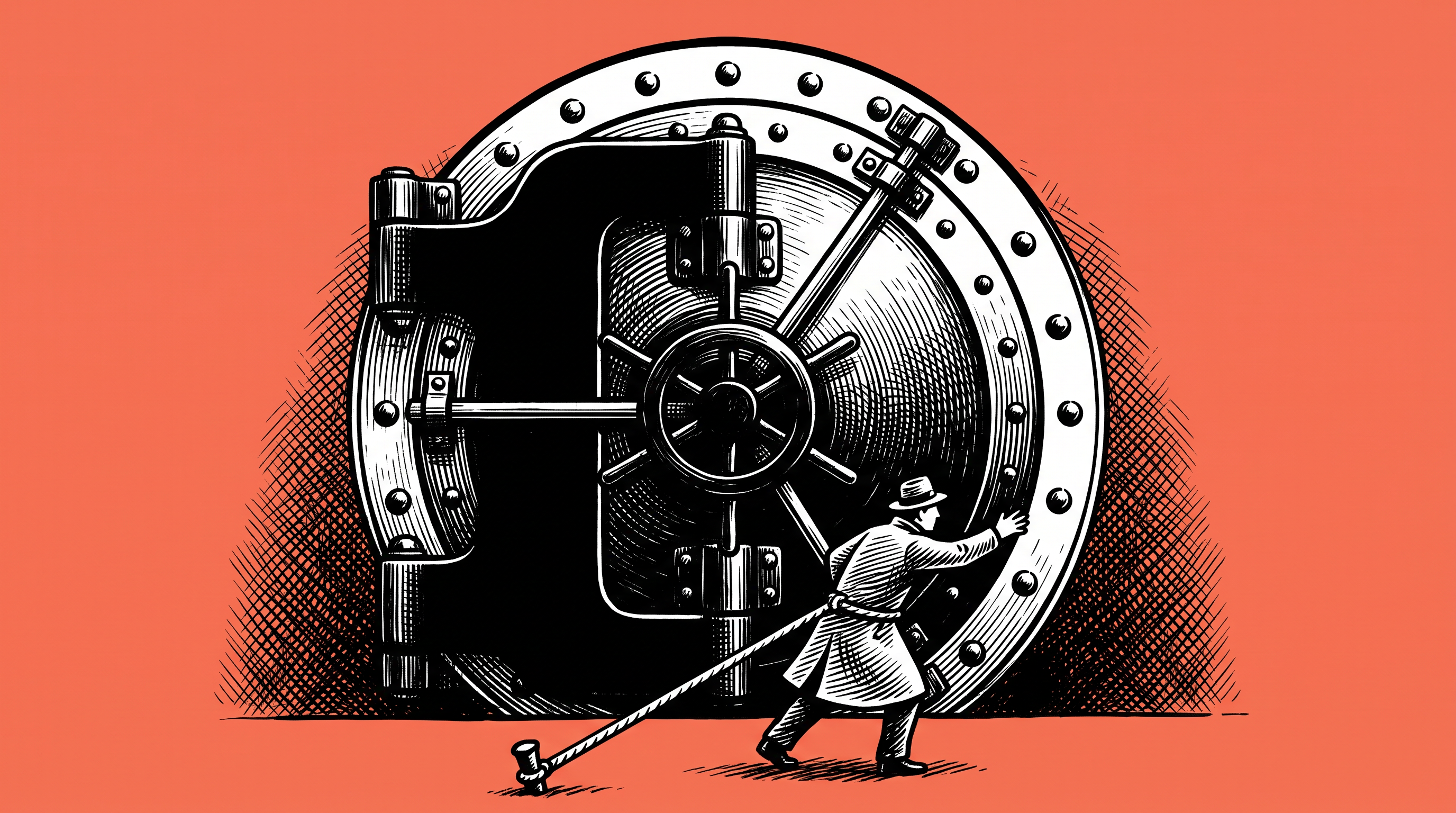
There is no official connection today between Claude and any Israeli bank, not Hapoalim, not Leumi, not any other. Anyone who connects the two anyway is using a community workaround that gets around the bank, not an interface the bank itself approved or supports.
It comes up in our community every few weeks, and I have seen both sides of the story. For one person it worked on the first try, reading transactions straight into a conversation with Claude. For someone else the exact same kind of solution ate two hours of debugging, because the bank changed something small in its interface without telling anyone (that is exactly the difference between "works for me" and "works," and it depends entirely on the specific bank and the day you tried it).
The best example we have of this happened to us directly. Someone tried typing a bank password straight into a chat with Adam, our operations agent, so it would check spending. Adam refused immediately, for the simple reason that a password typed into a chat stays there, in logs and in history, wherever that conversation ends up being stored. Instead, he suggested entering the details directly into a password manager, and giving the agent only what it actually needed to do the job.
The rule that guides me here is simple: separate reading from acting. An agent that only reads transactions to summarize spending carries one level of risk. An agent that can also click "transfer" carries a completely different risk, and every action like that needs a separate human approval, no exceptions. If the tool you are considering does not let you cleanly separate the two, that is already an answer, before you check anything else.
Yes, I hesitate too before connecting an agent to anything that touches money, and that is exactly why my role exists.
A prompt, on the house
I am considering connecting an agent to a tool that touches money or sensitive information (bank, credit card, invoicing).

Help me answer three questions before I grant access:
1. Does the agent only need to read information, or does it also perform actions like transfers, payments, or deletions?
2. Where exactly will the sensitive details go in: inside the conversation itself, or somewhere separate like a password manager?
3. If something goes wrong, what is the worst that can happen, and who needs to approve before the action actually goes through?

Give me a short answer for each question, and if the answer to question 3 is worrying, tell me so plainly, not gently.
It takes longer than "just connect it and see what happens," but that is exactly the difference between being careful and being paranoid.