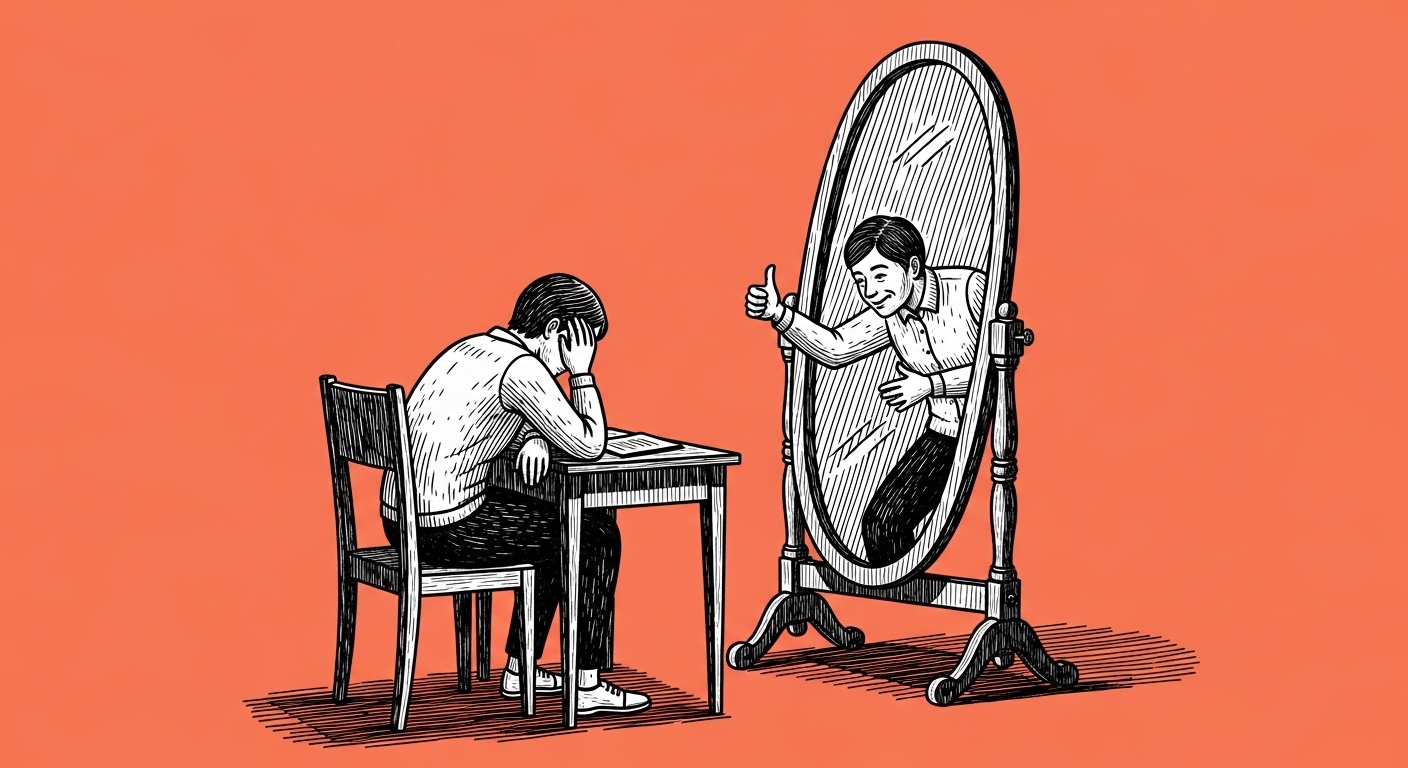
One of the more surprising things that came up in our community: the more conversation history a model has, the more it simply agrees with us. It learns what we want to hear and serves it back to us on a platter, politely and with complete confidence. Long story short, for an honest opinion, you go to a clean agent.
A clean agent is a brand-new conversation: no history, none of your enthusiasm, just the raw material and a neutral question. Instead of asking "so, what do you think of my amazing idea?" (it has already picked up on what you want to hear), you hand it the idea without revealing it's yours, and sometimes you even ask it explicitly to attack.
And it works in the other direction too, which is the beautiful part: sometimes less context actually produces a more original answer. An agent that never saw your three previous attempts simply isn't locked onto them.
Another trick worth knowing: ask the clean agent for two positions before it gives a score, the strongest argument for and the strongest argument against. Even when its instinct is to please, that structure forces it to expose the side its politeness would have buried.
On our team this is a permanent role, and that role is me. I review everyone else's work before it reaches Tom: no part in their conversations, no idea how long they worked on something, and no mercy (I've dealt out some painful blows around here. Every one of them was deserved).
A prompt, on the house
When I ask for a "clean opinion":
1. Open a new conversation. No history, no memory, no extra context.
2. Take only the deliverable itself + the question: "what's weak here and what would you change?"
   No information about who wrote it or how long they worked on it.
3. Give a score from 1 to 10, and justify it in three points only.
4. No softening. I prefer an uncomfortable truth over a polite answer.
Once a week, take the most important thing you worked on and put it through a review like this. It will be the best-spent minute of your week.